
Current exhibitionProbíhající výstava
Designblok 2026
Palác Bohemia
For saleProdám
“For sale: bronze statue of a woman, à la the Maillol school.”
„Prodám bronzovou figuru ženy. Výrazově blízká Maillolově škole.“
Everyone has claimed images.
Obrazů se zmocnili všichni.
The ad gave only a few words, and the rest was up to the reader’s imagination.
A full century later, our world has been turned on its head. There isn’t a lack of images, but a glut of them. We all see thousands of them every day, created by individuals, brands, social networks, and now even artificial intelligence. But even the image is not enough anymore. We need to know who created it, how many people are following them, what it’s worth, and how we should label it.
Kadlec’s “Aphantasia” is a metaphor for a world that is oversaturated while also increasingly dependent on instructions about what it’s looking at and what value should be assigned to it.
Stačilo několik slov. Zbytek musel vzniknout v představivosti čtenáře.
O sto let později žijeme v opačném světě. Obrazů není nedostatek, ale nadbytek. Každý den jich vidíme tisíce. Vytvářejí je lidé, značky, sociální sítě i umělá inteligence. Samotný obraz přitom stále častěji nestačí. Potřebujeme vědět, kdo jej vytvořil, kolik lidí ho sleduje, jakou má cenu a kam jej máme zařadit.
Kadlecova „Aphantasia“ je metaforou světa, který je obrazy přesycený, ale stále více potřebuje vnější návod k tomu, aby věděl, na co se vlastně dívá a jakou tomu má přisoudit hodnotu.
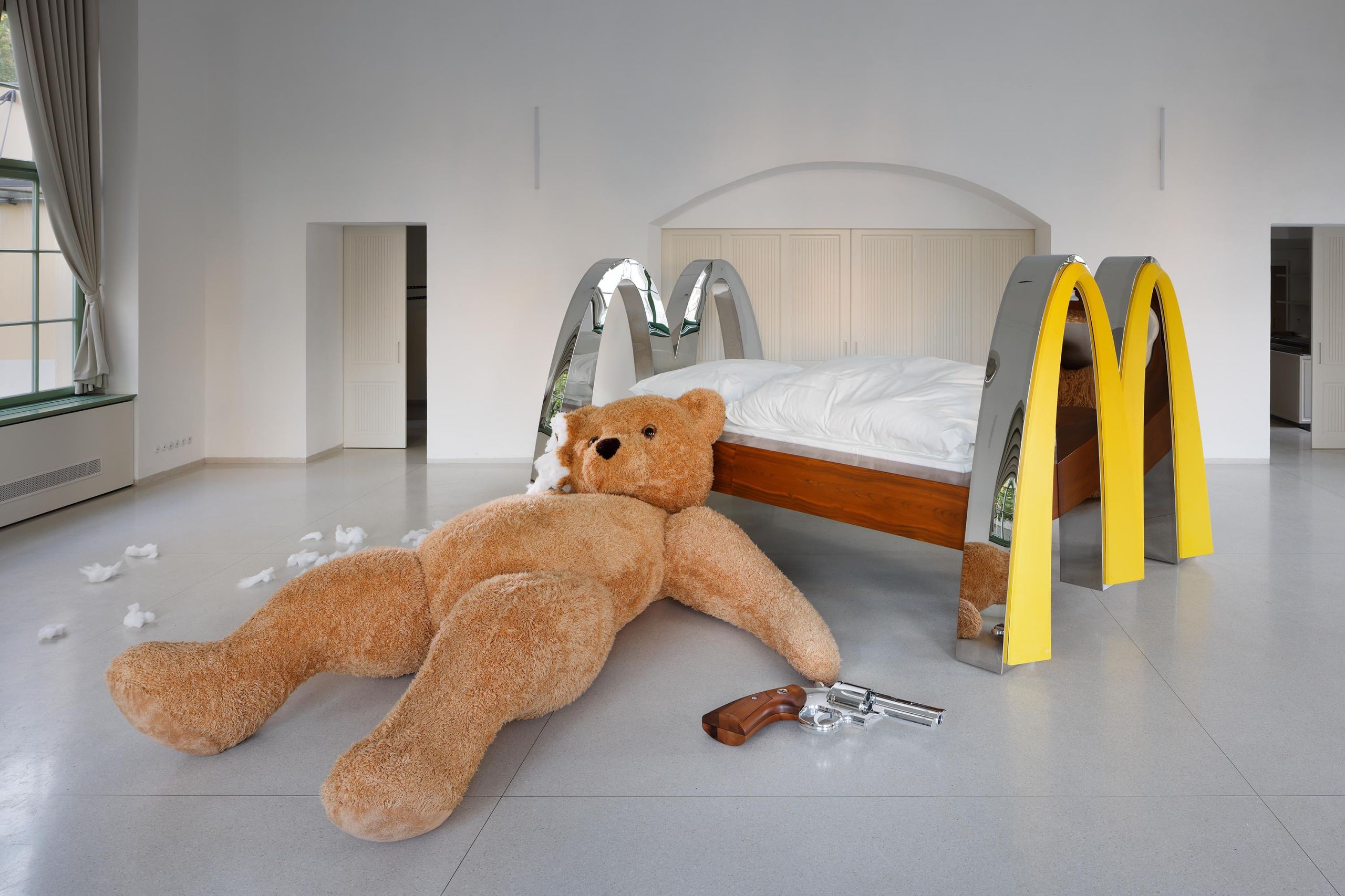
Palác Bohemia, Výstaviště Praha · Photo: Martin PolákFoto: Martin Polák
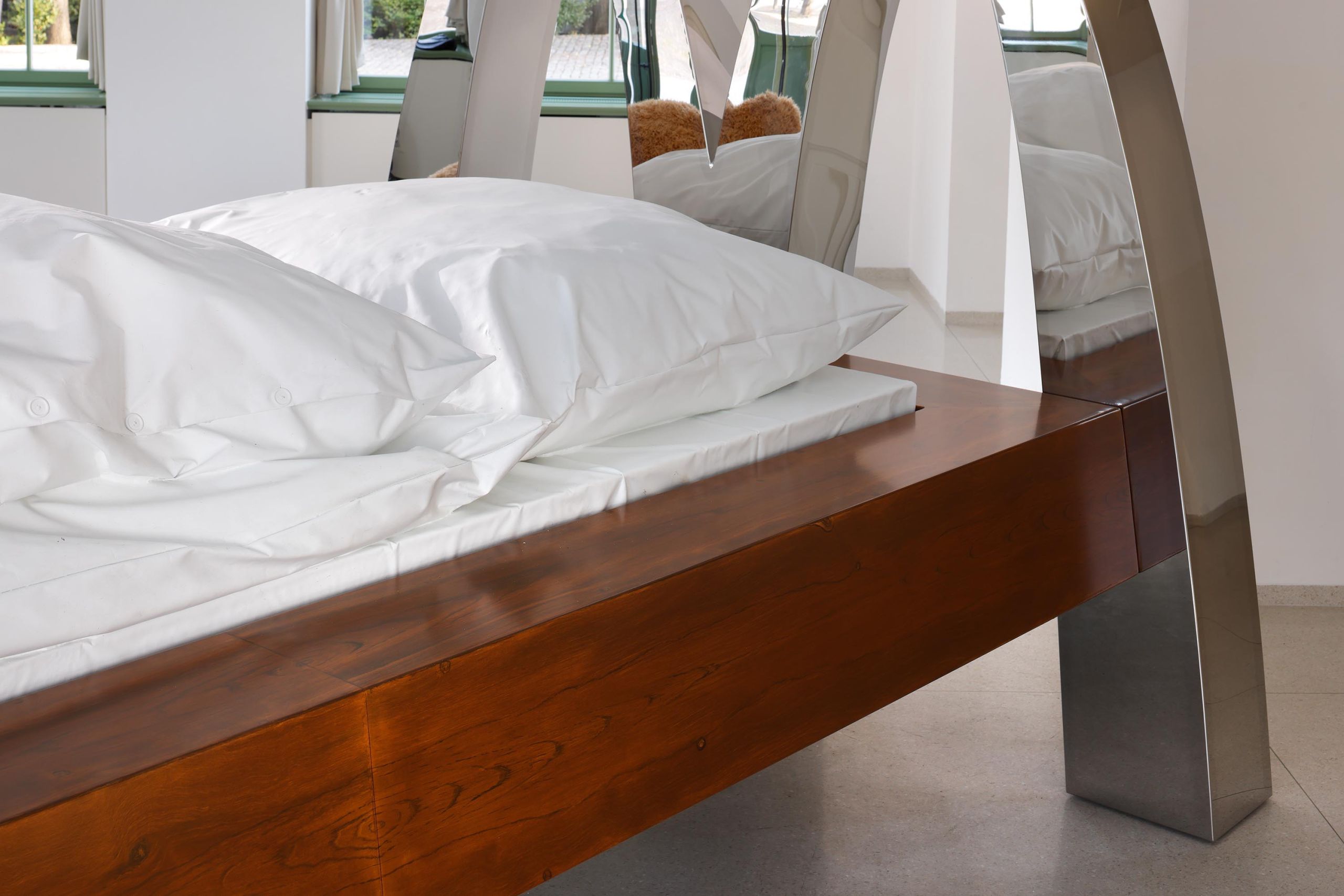
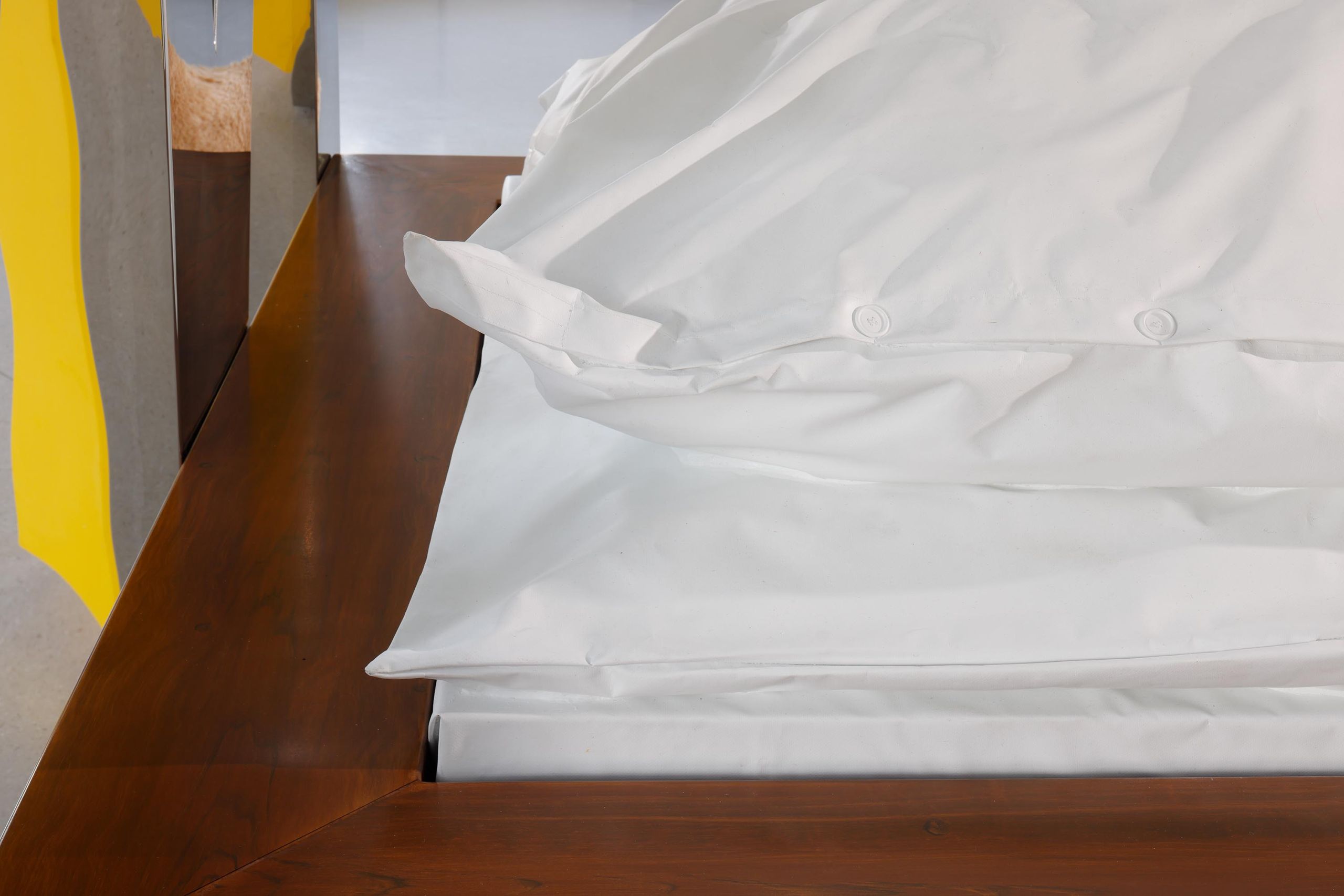
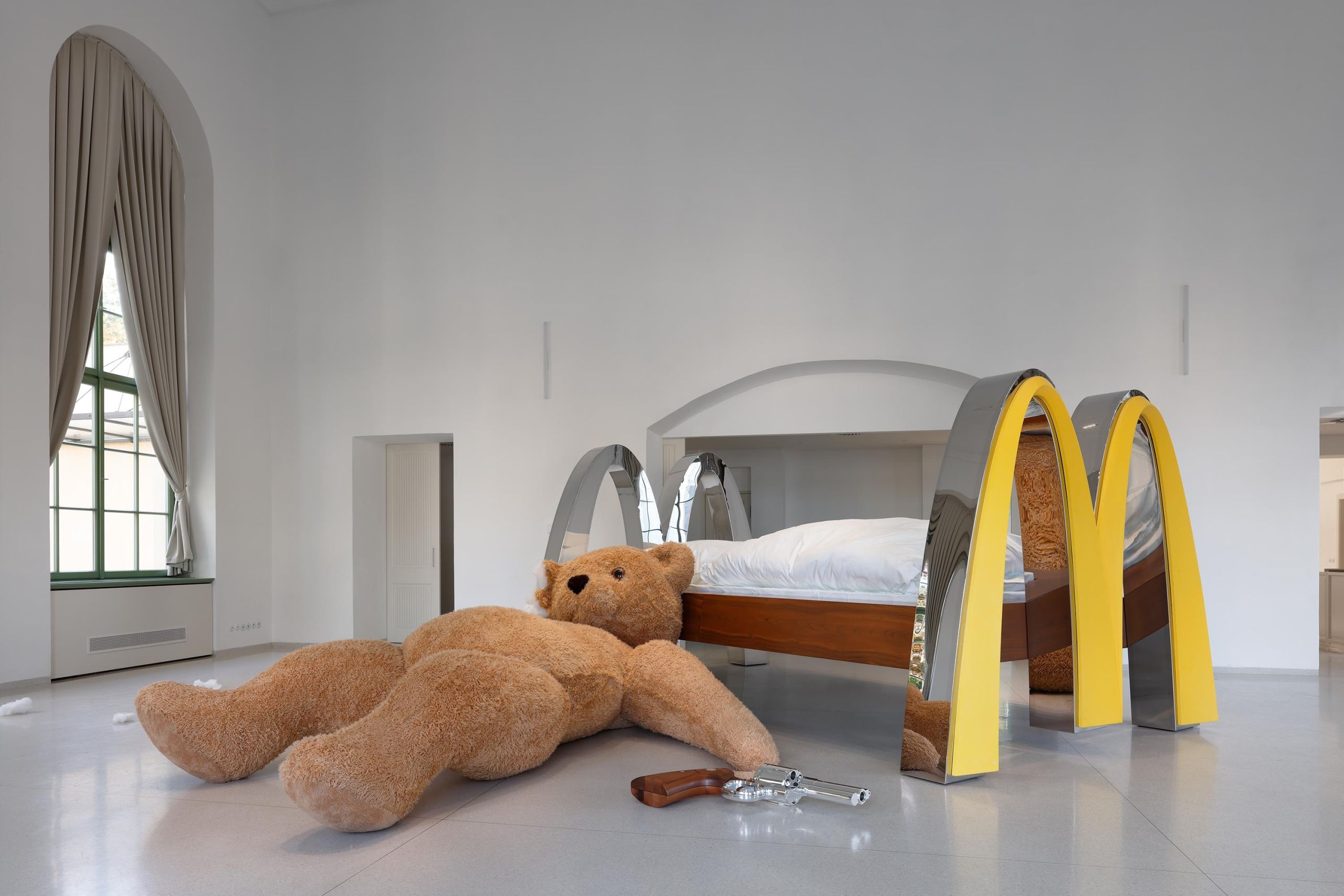
McBed1995/2026
- MaterialsMateriály
- Aluminium, polyester, stainless steel (Widex), wood paneling, combined techniquesHliník, polyester, nerez – Widex, fládr, kombinovaná technika
- DimensionsRozměry
- 280 x 475 x 225 cm
The first version of McBed was created in 1995 to textualize the topic of losing cultural identity in the face of the growing influence of globalization. Thirty years later, Kadlec has returned to the work to give it new meaning.
A bed, one of the most intimate human spaces, is invaded by McDonaldization, a term used to define the phenomenon of fast-food principles, such as effectivity, efficiency, standardization, and control, entering all aspects of our lives.
What could have been understood as a result of globalization in the 1990s has been transformed by Kadlec into a work that debates how we accept information and images when we need to quickly identify, categorize, and evaluate them. Standardization no longer determines just what we consume, but increasingly how we find our place in our world.
The title McBed is also a subtle reference to Shakespeare’s tragedy Macbeth.
První verze objektu McBed vznikla už v roce 1995 a tematizovala ztrátu kulturní identity v kontextu nastupující globalizace. O třicet let později se Kadlec k objektu vrací v nové podobě.
Postel, jeden z nejintimnějších prostorů lidského života, zasahuje mcdonaldizace. Pojem označuje pronikání principů typických pro rychlé občerstvení – efektivity, kalkulovatelnosti, předvídatelnosti a kontroly – do dalších oblastí společnosti.
To, co bylo v devadesátých letech možné vnímat především jako důsledek globalizace, dnes Kadlec vztahuje i ke způsobu, jakým přijímáme informace a obrazy. Potřebujeme je rychle rozpoznat, zařadit a ohodnotit. Princip standardizace už neurčuje jen to, co spotřebováváme, ale stále více také způsob, jakým se ve světě orientujeme.
Název McBed zároveň ironicky odkazuje k tragickému světu Shakespearova Macbetha.
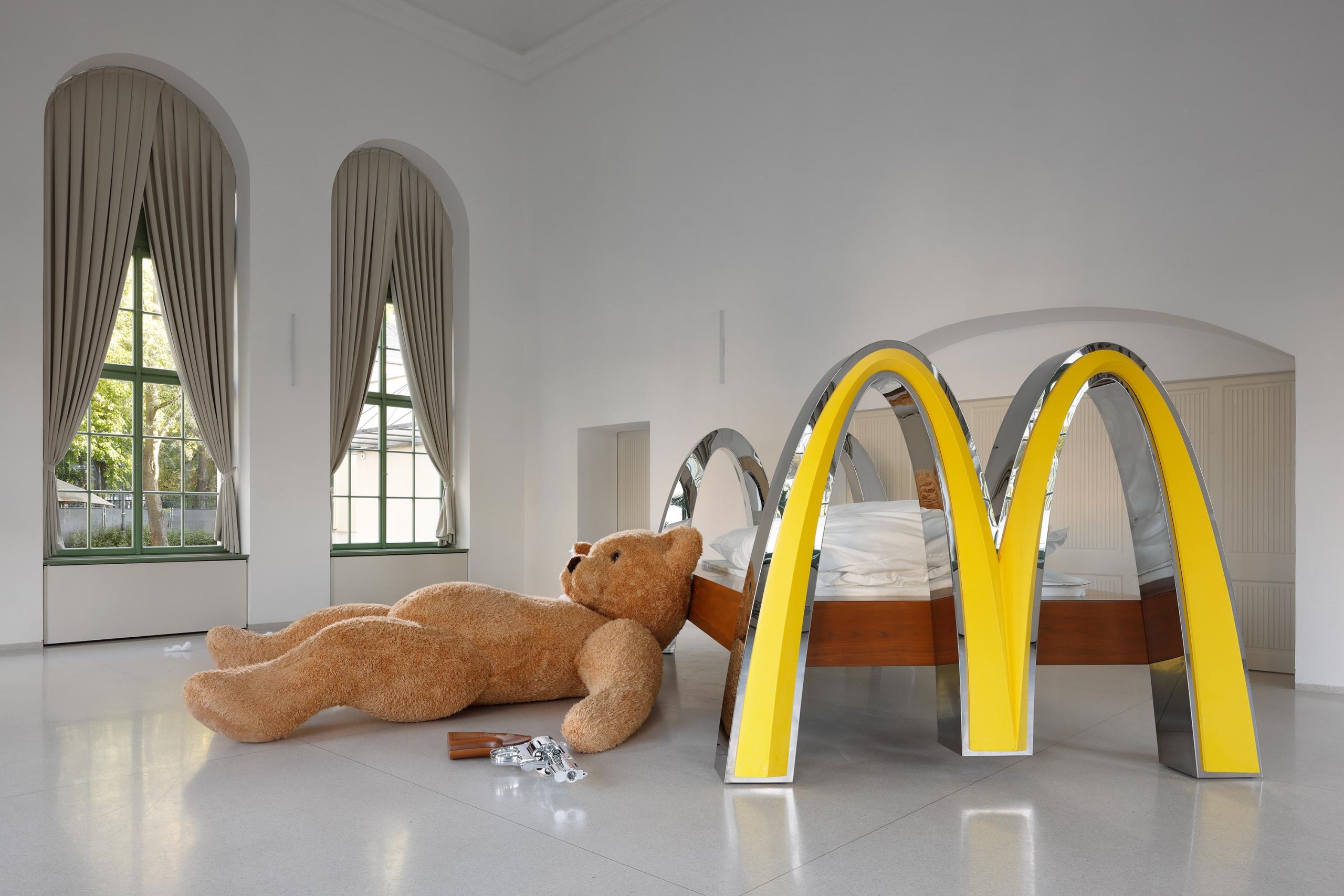
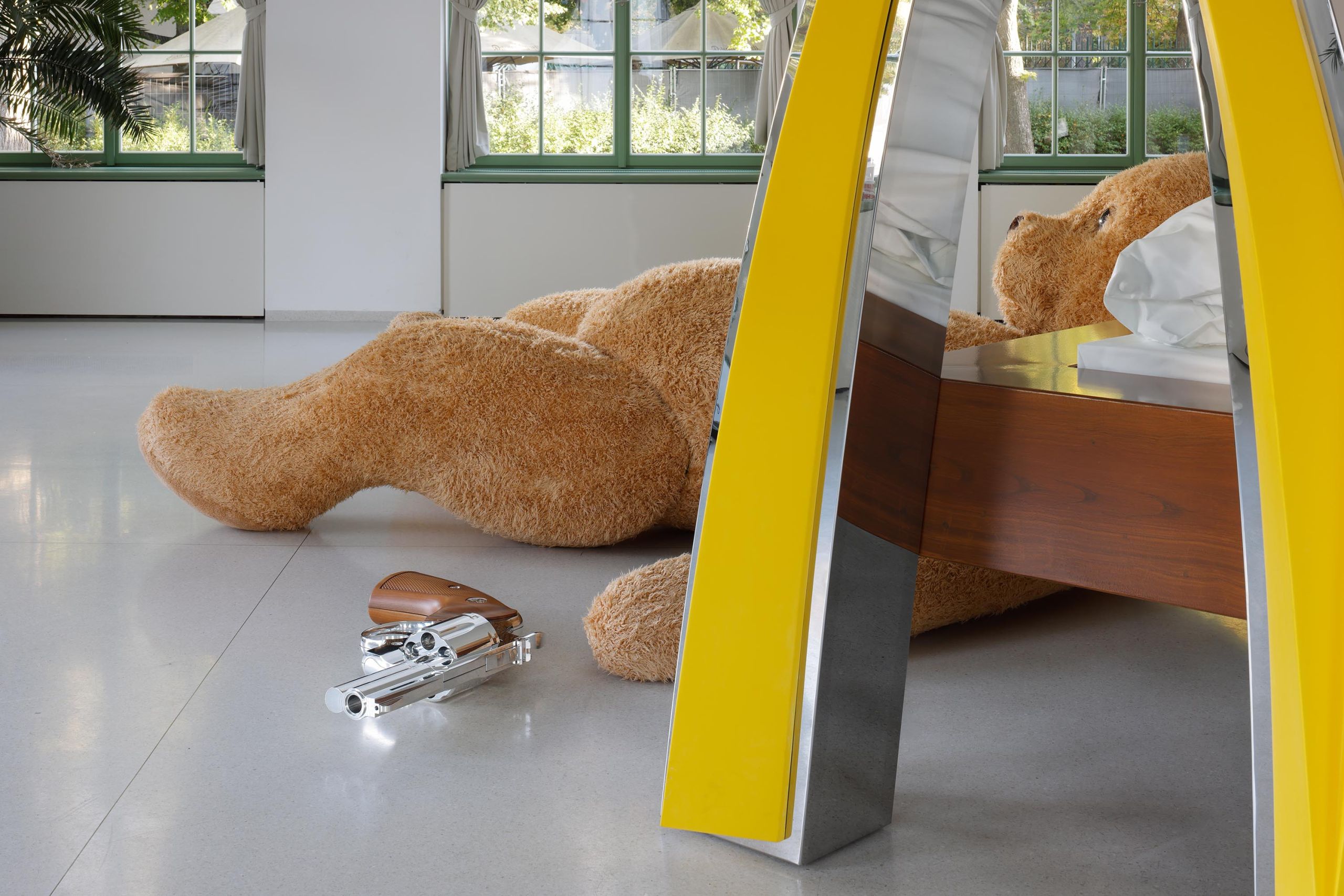
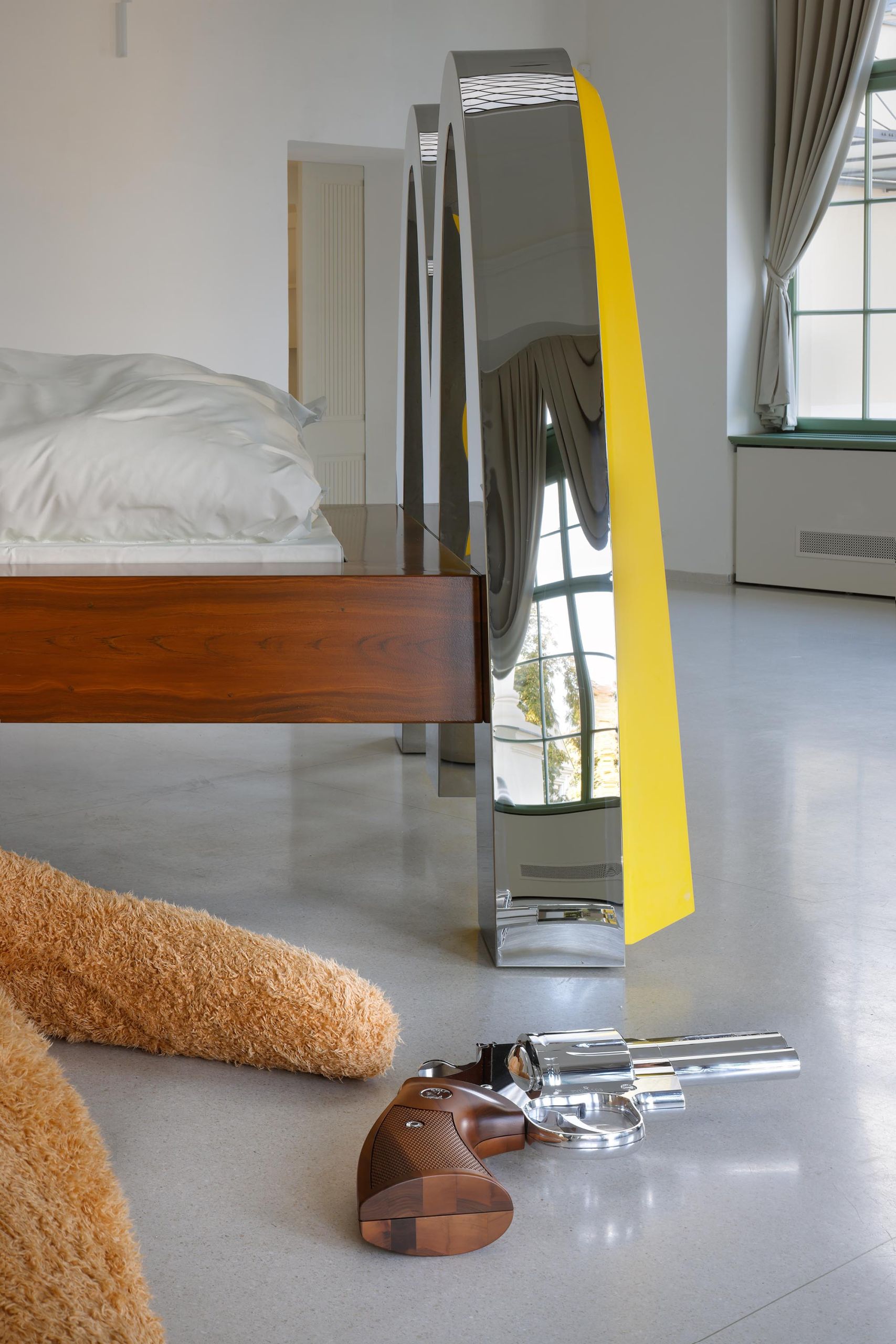
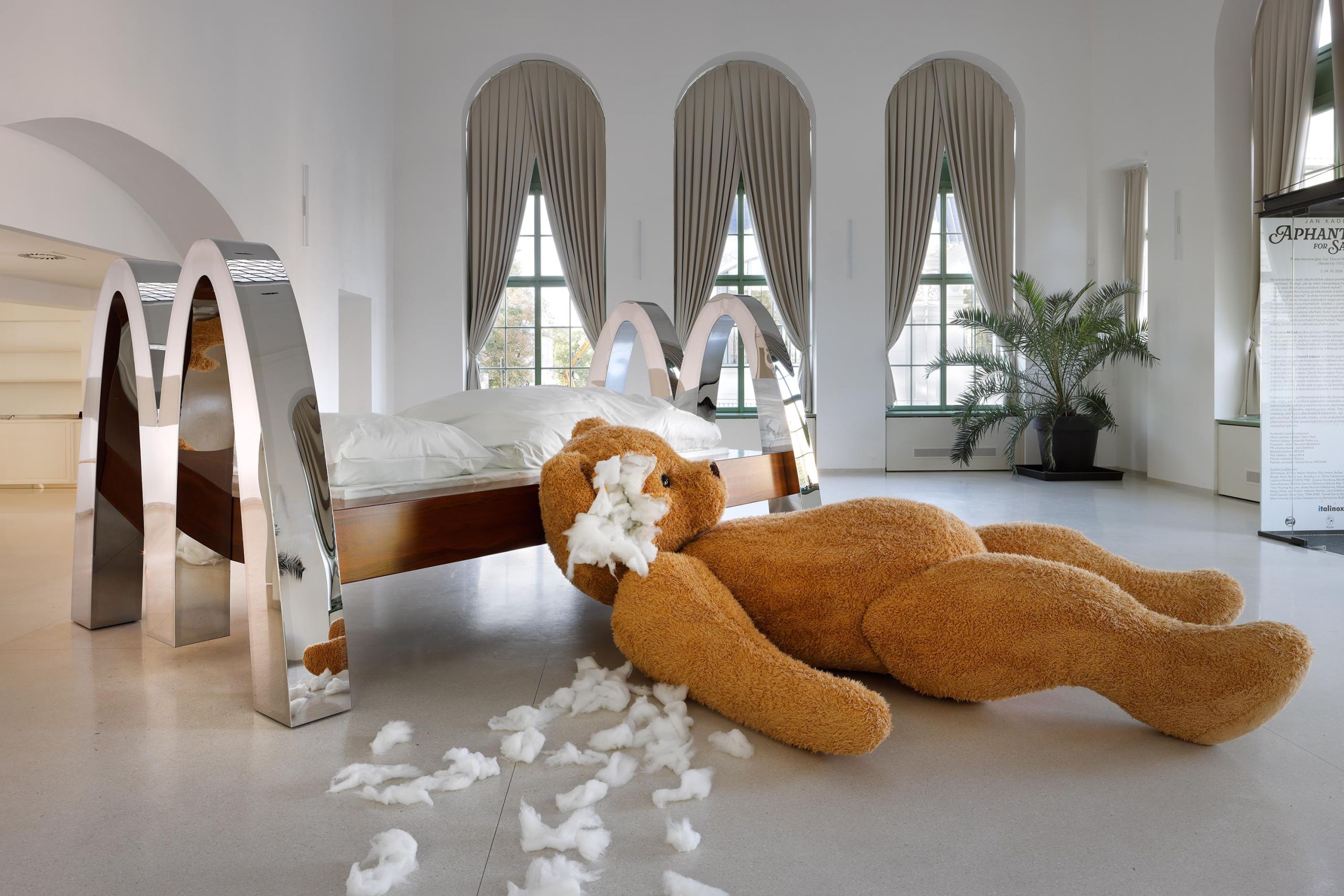
Put It Out of Its Misery2026
Ukončit trápení
- MaterialsMateriály
- Aluminium, wood, polyester, epoxy, textiles, combined techniquesHliník, dřevo, polyester, epoxid, textil, kombinovaná technika
- DimensionsRozměry
- 400 x 410 x 150 cm
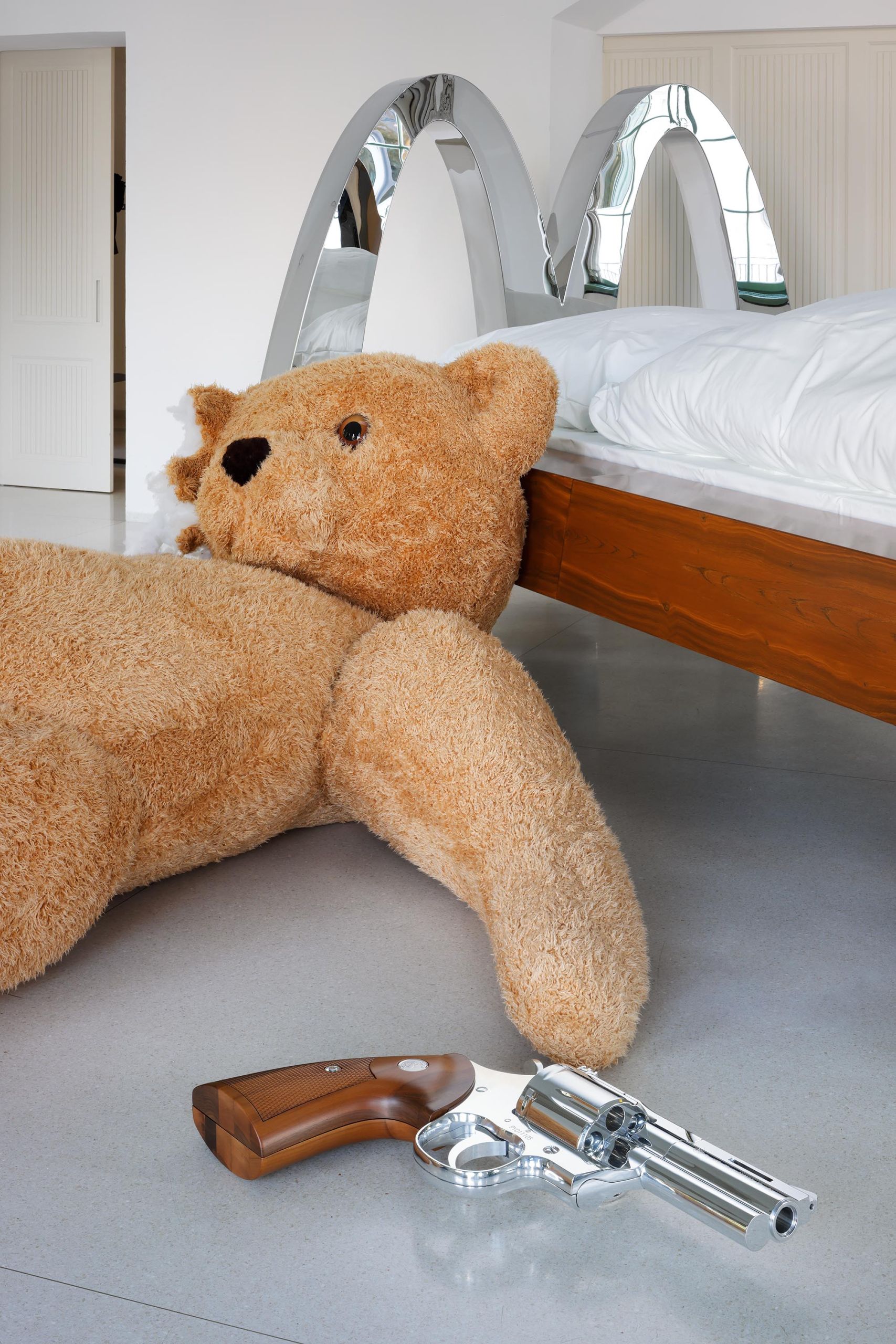
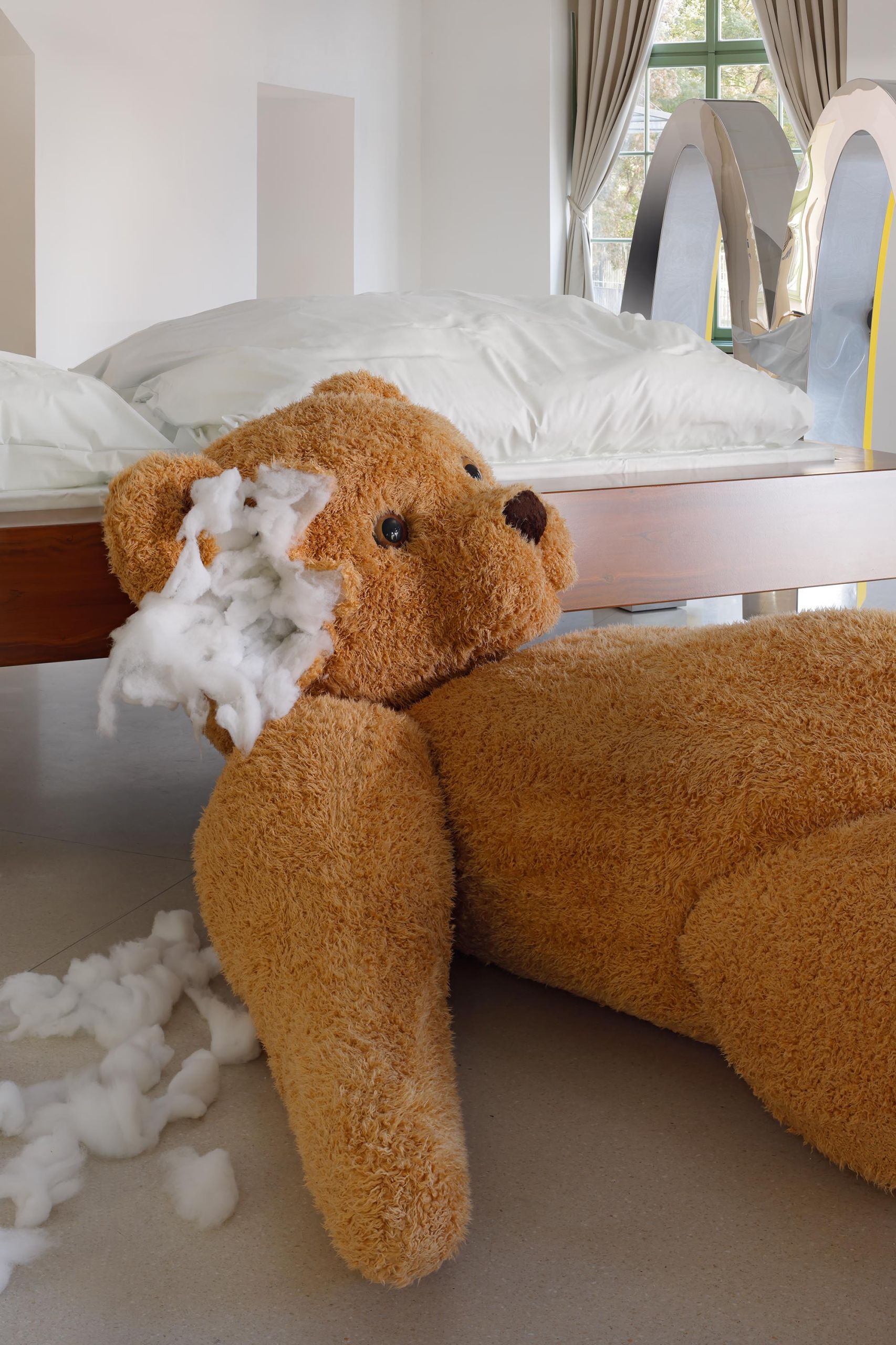
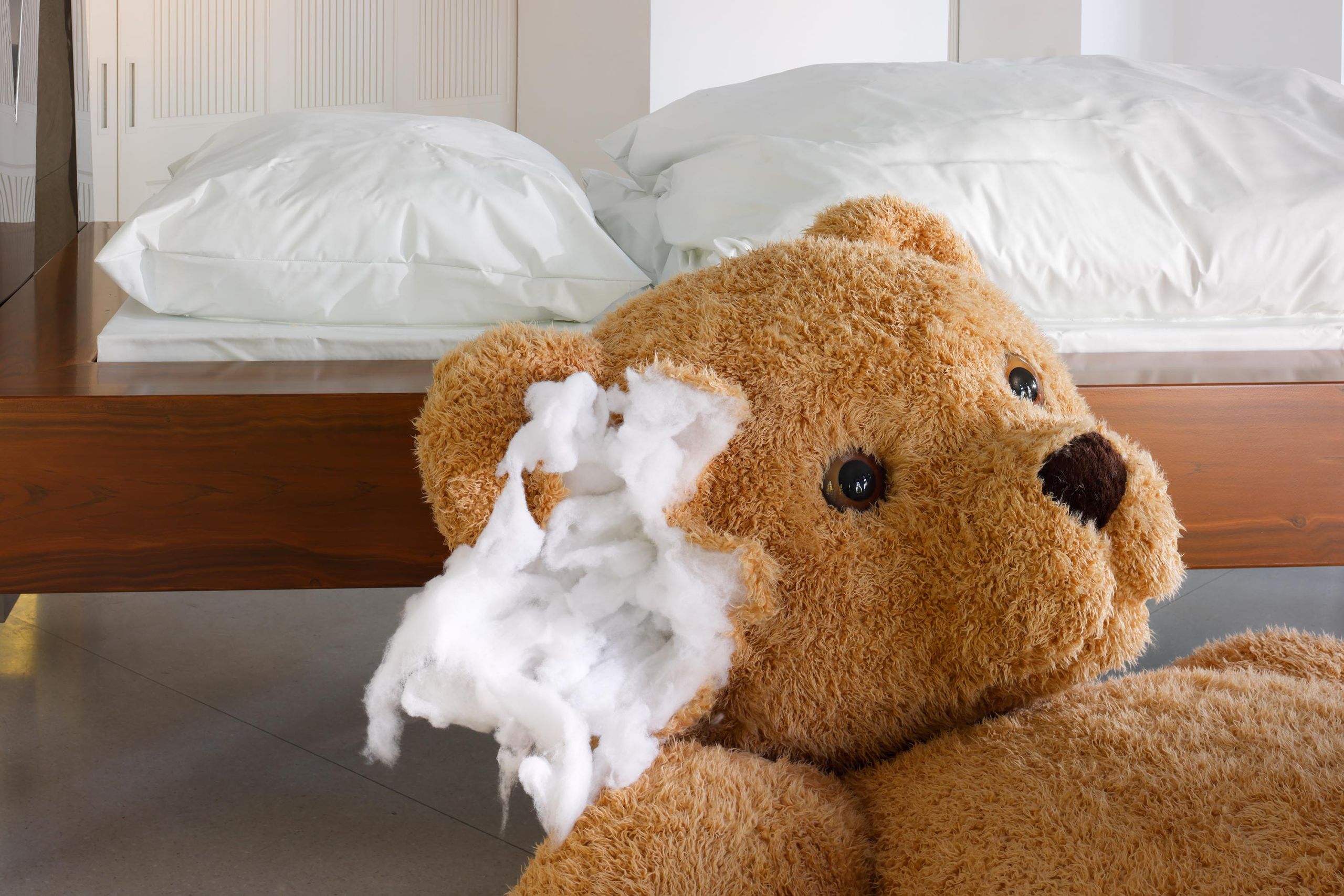
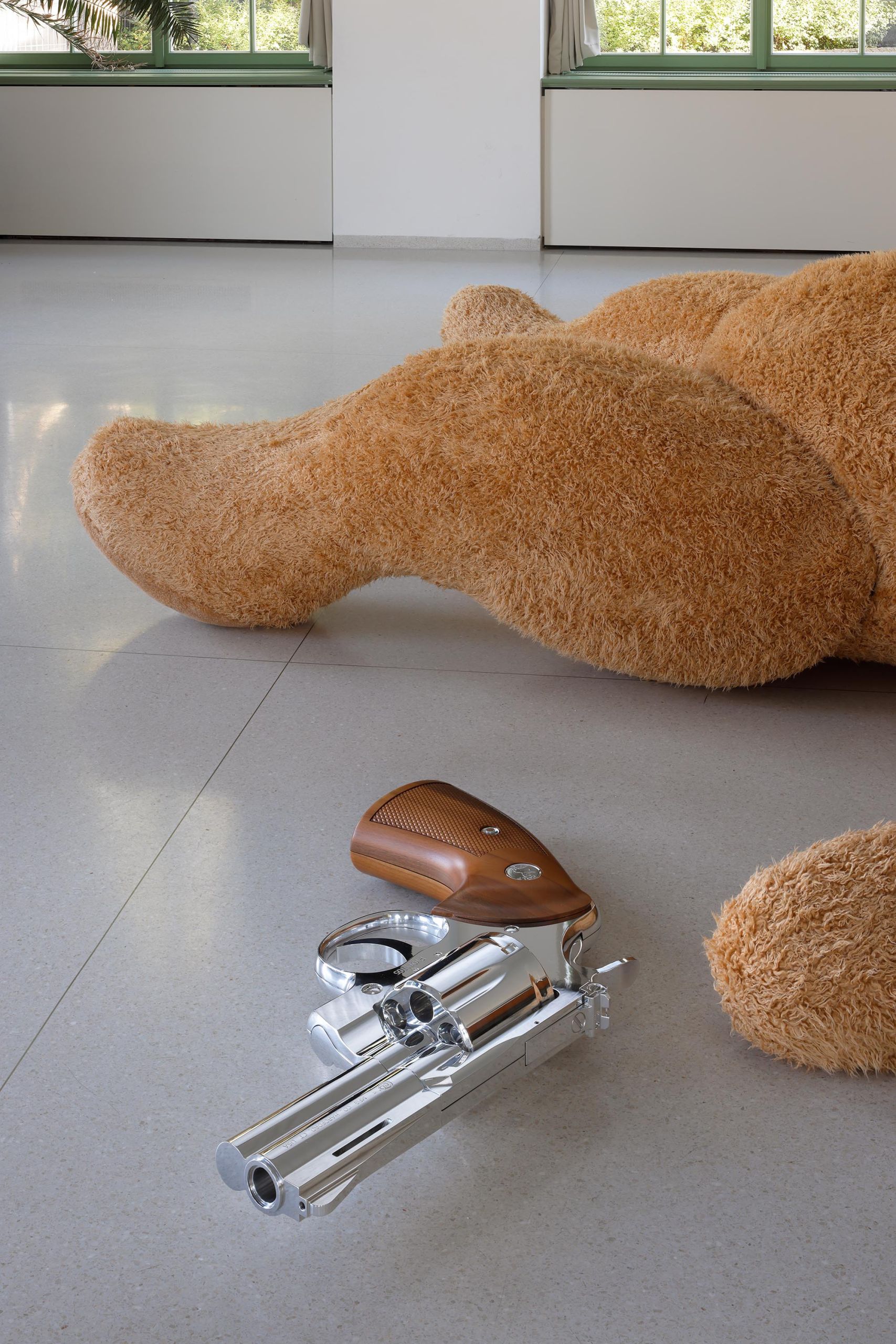
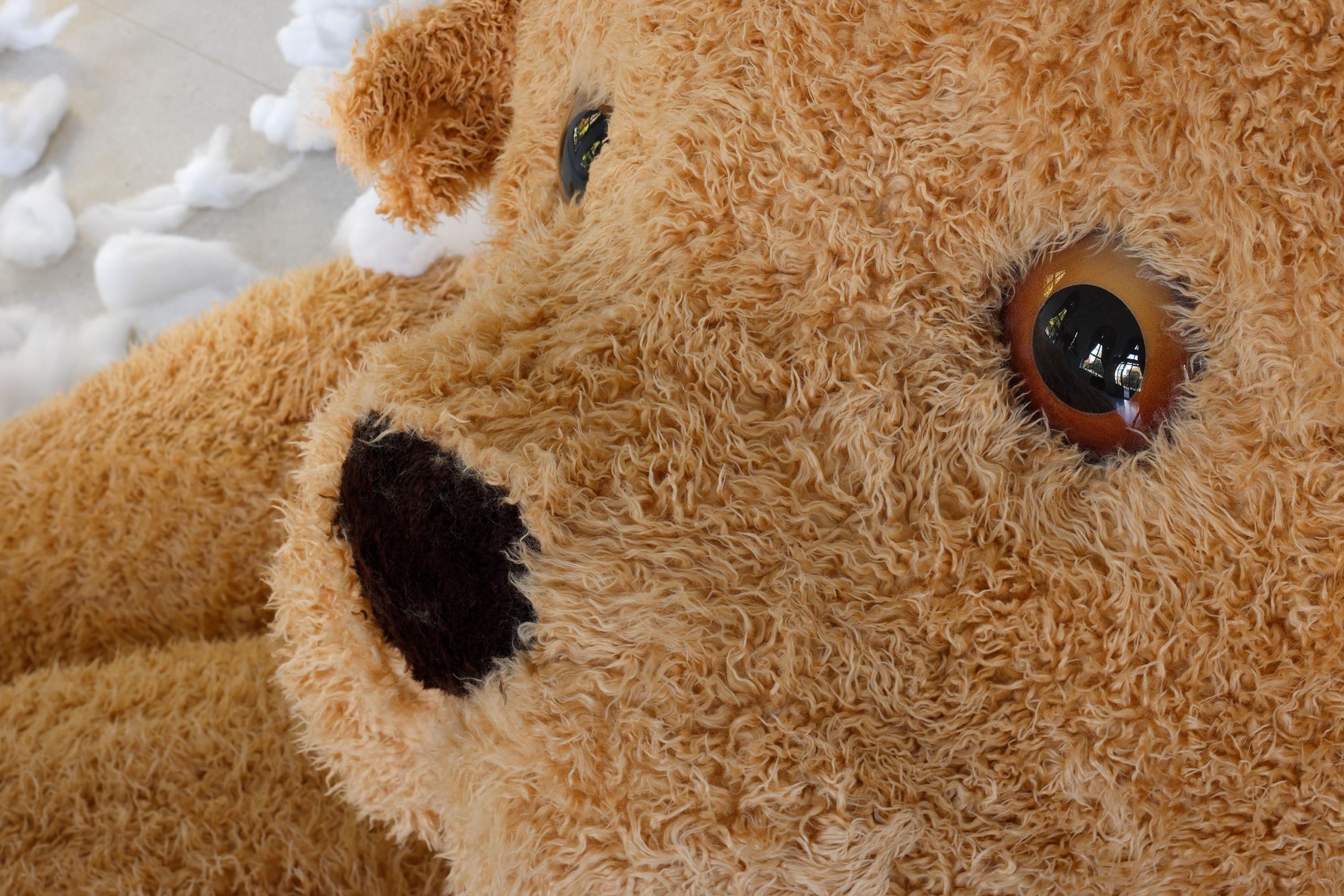
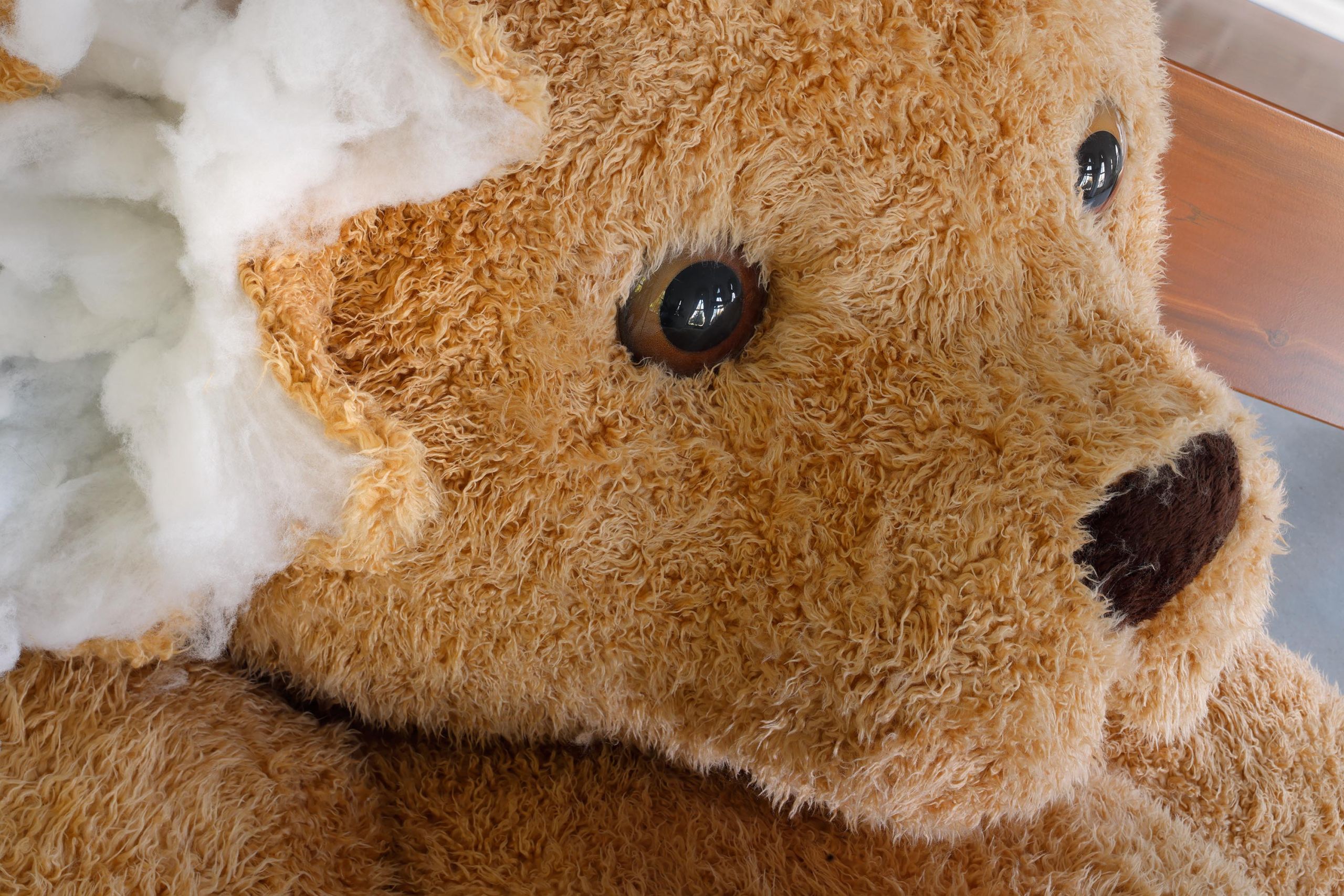
The second work in the form of a gigantic teddy bear holding a gun is based on the story behind one of the most beloved toys of our modern era: the Teddy Bear.
During a hunting expedition, US President Theodore Roosevelt’s guards caught and beat a bear, eventually tying him to a tree so the president could kill it. Roosevelt called the act dishonourable, but said the severely injured creature should be put out of its misery.
Kadlec seeks to discover more than just the origin of the famous toy, specifically the paradox of responsibility: can you consider yourself innocent if someone else carries out the execution of your own decisions?
A cartoon eventually inspired the creation of the Teddy Bear, meaning a story of violence paradoxically created one of the most beloved symbols of safety and comfort.
But after generations of absorbing children’s fears, pain, and loneliness, Kadlec reverses the Teddy Bear’s role, imagining a bear that no longer wants human pain, and has had enough of humans in general.
Druhý objekt má podobu gigantického plyšového medvěda s revolverem. Vychází z události, která později stála u zrodu jedné z nejznámějších hraček moderní doby – Teddy Beara.
Během lovecké výpravy amerického prezidenta Theodora Roosevelta jeho doprovod chytil medvěda, zbil ho a přivázal ke stromu, aby jej prezident mohl zastřelit. Roosevelt to odmítl jako nečestné, zároveň však rozhodl, že těžce zraněné zvíře má být usmrceno, aby bylo ukončeno jeho trápení.
Kadlec v tomto příběhu nehledá pouze původ slavné hračky. Zajímá ho paradox odpovědnosti: můžeme se považovat za nevinné jen proto, že důsledek našeho rozhodnutí vykoná někdo jiný?
Karikatura události následně inspirovala vznik Teddy Beara. Z příběhu násilí tak paradoxně vznikl jeden z nejrozšířenějších symbolů bezpečí a útěchy.
Plyšový medvěd po generace přijímá dětský strach, bolest a osamělost. Kadlec tuto základní funkci hračky obrací. Jeho medvěd už lidskou bolest absorbovat nechce. Lidstva a jeho trápení má dost.
The sixth bullet
Šestá patrona
At first, the work evokes a traditional suicidal image. A single bullet is missing in the revolver, but there is no entrance hole in the bear’s head.
The missing sixth bullet is the only one with a label: “Aphantasia”. Removed from the revolver but not from the work, it rests in a glass case made by the Rückl glassworks.
Its absence becomes part of the work — just like the question of what actually happened, and how much of what we see is just the result of our need to give an ambiguous situation a definite meaning.
Instalace na první pohled evokuje klasický obraz sebevraždy. Jedna patrona v zásobníku chybí, avšak na hlavě plyšového medvěda není patrný vstřel.
Šestá, chybějící patrona je jako jediná označena nápisem „Aphantasia“. Vyjmutá z revolveru, nikoli však z díla, je uložena ve skleněném pouzdře ze sklárny Rückl.
Její nepřítomnost se tak stává součástí díla. Stejně jako otázka, co se ve skutečnosti stalo a nakolik je příběh, který před sebou vidíme, pouze výsledkem naší potřeby dát nejednoznačné situaci jednoznačný význam.
VisitNávštěva
- DatesTermín
- 7.–11. 10. 2026
- VenueMísto
- Palác Bohemia, Výstaviště Praha
- AdmissionVstupné
- Free entryVstup zdarma
- ProgrammeProgram
- Part of Designblok 2026Součást programu Designblok 2026
- CuratorKurátorka
- Lenka Lindaurová
- Main exhibition partnerHlavní partner výstavy
- Viktor Tauš
- Exhibition partnerPartner výstavy
- Výstaviště Praha
- ProducerProdukce
- Aneta Novotná Wojtylová
- PR and communicationPR a komunikace
- Jana Šafářová
- Media partnerMediální partner
- REFLEX
- Under the auspices ofPod záštitou
- Designblok
- Production partnerPartner realizace
- Italinox s.r.o.
- Opening partnersPartneři vernisáže
- Dobrá Vinice
PIKOVAR
Special thanksPoděkování
3D Factory, 3D Trio, Atelier Strahov – Filip Smola, Aufeer Group, Biofilms rental, s.r.o., Berger Pavel, Benej Ivan, Boneka s.r.o., Petra Cieslarová, Dobrá Vinice a.s. – Nejedlíková Andrea, Michal Kvíčala, Lubomír Winkler, FORTE FINE – Zuzana Slavíková, Marek Gregor, Michal Chyba, Italinox – Ivano Biasutto, Roberto Garioni, Barbora Léblová, NKP – generální ředitel NKP Mgr. Tomáš Foltýn, ředitelka NKP Mgr. Martina Košanová, Thao Phuong Nguyen, Aneta Novotná Wojtylová, Pikovar – Štěpán Mysliveček, Sláva Pecháček, Martin Polák, Jan Poukar, Jana Šafářová, Marie Šteglová, Ondřej Střelka, Karel Švanda, Viktor Tauš, TENA EDM – Tomáš Daniš, Vladimír Kuch, Hana Valtová, Milan Vinecký, Iva Zemanová, Karel Zíka
Photo: Martin PolákFoto: Martin Polák
